Professional services
For healthcare & wellness professionals
Your Clients Need More Personalized Nutrition Support? I Can Help.
From specialized DNA nutrition analysis to ongoing one-on-one coaching, I provide the additional insights and practical support your clients may need beyond your appointments.
For Registered Dietitians, Functional & Integrative Medicine Practitioners, NPs & PAs, OB-GYNs & Menopause Specialists, and Longevity Practices.

Anastasiia · M.S. Integrative Nutrition
Nutrigenomics & Personalized Nutrition Consultant
Nutrigenomics & Personalized Nutrition Consultant
Recognize someone in your practice?
Have a Client Who Could Use More Support?
A closer look at nutrition genetics
- Has DNA data but needs help understanding nutrition-related findings.
- Wants a detailed, professionally interpreted review.
- Is curious about nutrient metabolism, food responses, or eating behavior.
- Would like genetic findings considered with diet, available labs, and lifestyle.
Help turning advice into habits
- Knows what to eat but struggles to follow recommendations consistently.
- Needs practical meal planning and accountability.
- Could use nutrition guidance between appointments.
- Needs dedicated support building sustainable everyday habits.
Two independent services
Specialized insight. Practical follow-through.
DNA Nutrition Analysis
I handle the DNA nutrition review—from compatible data or coordinated new testing to interpretation and a structured report.
Selected nutrition-related findings are considered with dietary habits, health history, lifestyle, and supplied labs. Your client receives organized written findings and an explanation of practical nutrition considerations within the agreed scope.
Individual interpretation gives the findings context beyond an automated report. Results are informational, not diagnostic.
Existing DNA Data or New Testing
Both options are available; I coordinate the agreed next steps.
Already Tested
Compatible raw files from 23andMe, AncestryDNA, Genotek, and other supported providers may be used. Format and variant coverage are checked first.
Need Testing
I can coordinate testing through tellmeGen for eligible clients. Ordering arrangements and any separate testing costs are confirmed before proceeding.
DNA Nutrition Analysis · Sample PDF · 11 pages
See What Your Client Receives
Explore a professional sample showing how genetic findings, dietary history, laboratory context, and practical nutrition priorities come together.
De-identified and adapted case example. Open the full PDF to review or save a copy.


What the review may explore
Nutrition-related genetics, in context.
Vitamins & nutrient metabolism
Selected folate and methylation pathways, vitamin A conversion, and fatty-acid metabolism in dietary context.
Food & dietary responses
Lactase persistence and caffeine-related findings, considered with intake and observed tolerance.
Cardiometabolic nutrition
Selected lipid-related associations alongside eating patterns and available laboratory results.
Appetite & eating behavior
Research on appetite and weight-related tendencies, interpreted with habits and environment.
Women’s nutrition & healthy aging
Relevant nutrition context for dietary adequacy, cardiometabolic health, and established bone and muscle nutrition priorities.
Other supported findings
Additional nutrition-related traits where data quality and evidence support a meaningful discussion.
Review areas depend on compatible data and the agreed scope. Gene examples, methylation and CYP context, evidence limitations, and sources are available in the expandable scientific section below.
Personalized Nutrition Coaching
Practical support beyond your appointments.
I help your clients turn nutrition recommendations into consistent, sustainable changes.
From advice to everyday habits
Individual nutrition and lifestyle assessment, practical meal strategies, protein and nutrient adequacy, and sustainable eating, sleep, movement, and recovery routines.
Consistent, individualized support
Biweekly one-on-one consultations, between-session support, progress reviews, and adjustments. I handle the practical follow-through while you continue your existing work with the client.
Three-month individualized support, with longer-term options. Coaching is available independently of DNA analysis. Relevant updates may be shared with client consent.
Support for your practice
When to Refer by Specialty
Functional & Integrative Medicine
When to refer: Additional nutrigenetic interpretation or help implementing recommendations.
How I help: Contextual DNA review, coaching, or both.
Registered Dietitians
When to refer: Specialized DNA questions or a need for additional accountability.
How I help: Nutrition-focused interpretation and optional coaching alongside your work; medical nutrition therapy stays with the RDN.
OB-GYN & Menopause Specialists
When to refer: Dietary adequacy, eating habits, or midlife nutrition support.
How I help: DNA context for COMT, methylation, and estrogen-metabolism pathways, plus nutrition coaching.
Longevity & Preventive Medicine
When to refer: Protein adequacy, cardiometabolic nutrition, or consistent habits.
How I help: Coaching with optional evidence-informed DNA context, without lifespan predictions.
Meet Anastasiia
Your Nutrition & Nutrigenetics Resource

Anastasiia presenting to an audience.
Anastasiia
Integrative Nutritionist
Nutrigenomics & Personalized Nutrition Consultant
Integrative Nutritionist
Nutrigenomics & Personalized Nutrition Consultant
My background combines advanced nutrition education, specialized genetics training, and experience translating complex scientific information into clear, practical, individualized guidance. I connect genetic findings with diet, supplied labs, lifestyle, and everyday implementation.
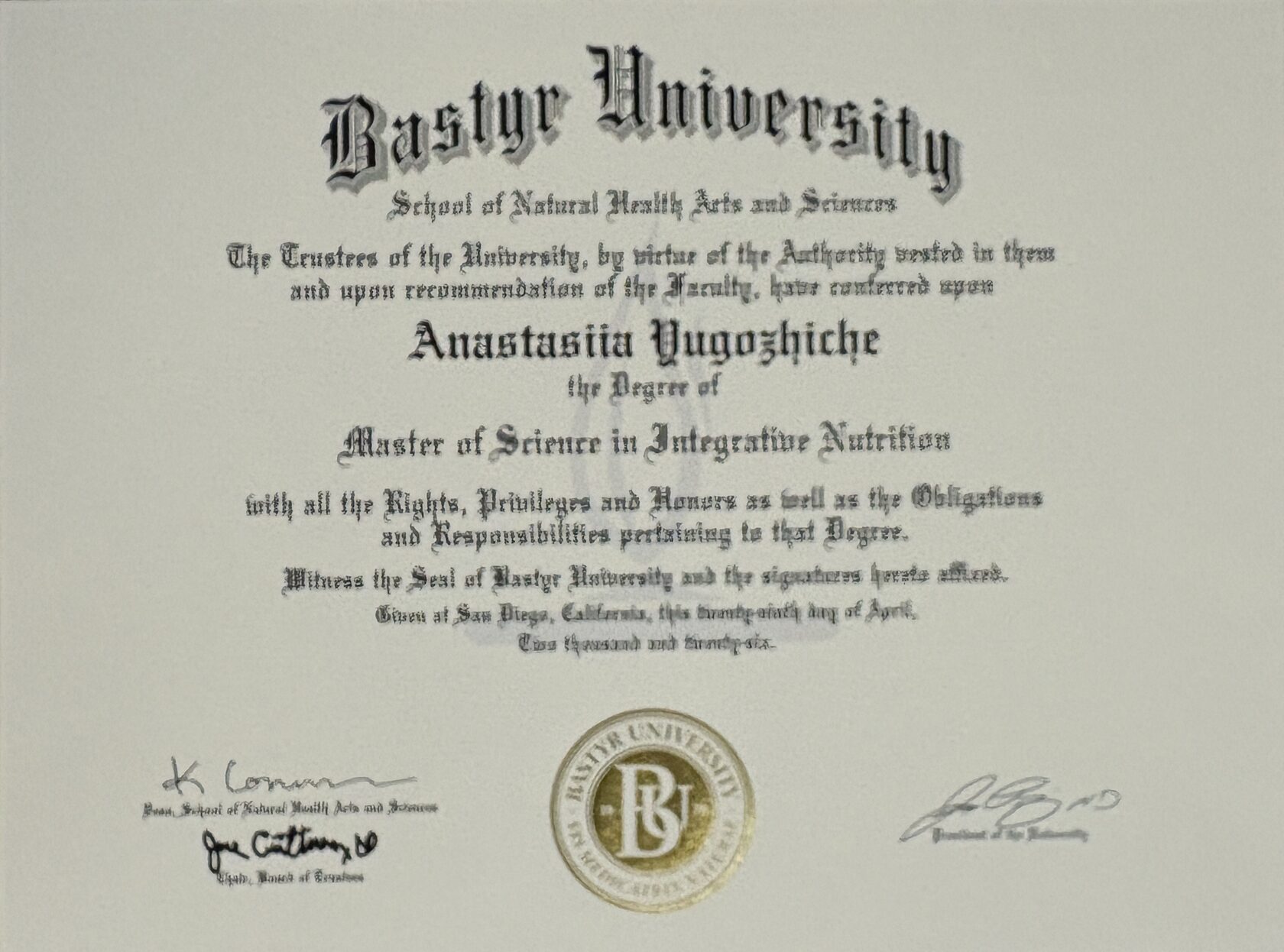
M.S. Integrative Nutrition — Bastyr University
Nutritional genetics education — School of Integrative Genetics, under clinical geneticist supervision
Precision Nutrition — Coaching education
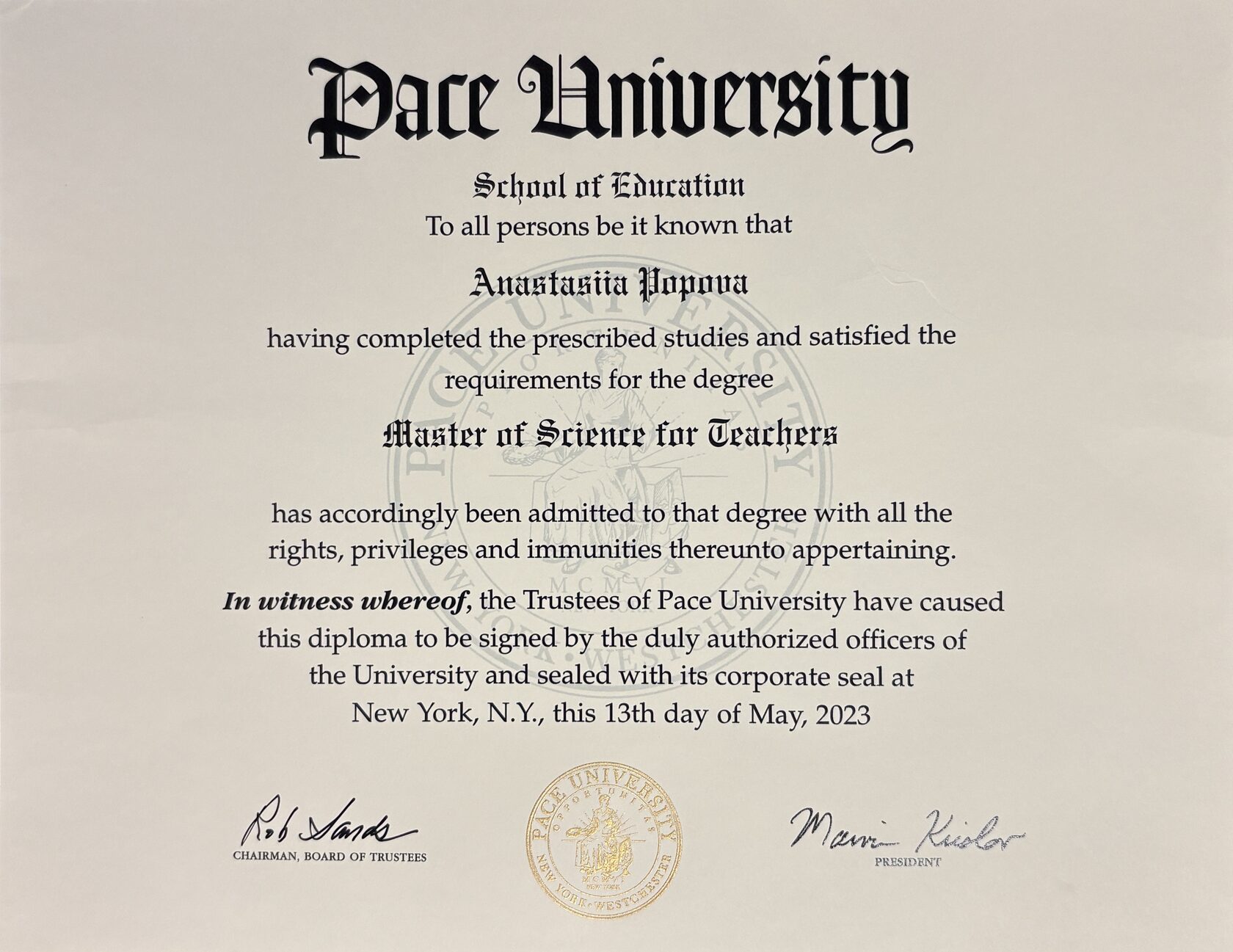
M.S. Education — Pace University
Education documents: Bastyr University diploma · Pace University diploma
Recommend → Connect → Support
Recommend the service; your client contacts me directly; I provide the agreed DNA analysis, coaching, or both. No formal partnership is required. Relevant information may be shared with client consent.
Recommend the service; your client contacts me directly; I provide the agreed DNA analysis, coaching, or both. No formal partnership is required. Relevant information may be shared with client consent.
Professional inquiry
Have a Client in Mind? Get in Touch.
Ask about DNA Nutrition Analysis, coaching, or both.
General professional inquiries only. Please do not submit patient information, medical records, or genetic files.
Referral details & scientific approach
Optional technical information for referring professionals.
Examples describe potential review areas, not a fixed panel. Coverage and relevance are checked for each file.
NUTRIENT METABOLISM — Selected MTHFR, MTR and MTRR variants are studied in folate-related pathways; BCMO1/BCO1 in beta-carotene conversion; FADS1/FADS2 in fatty-acid profiles. Examples include MTHFR C677T, BCMO1 rs7501331, and the FADS-region rs174537. Findings are considered with diet and supplied labs. A common MTHFR variant does not diagnose deficiency or mandate methylated supplements.
FOOD & CAFFEINE — The LCT/MCM6 region, including rs4988235 in relevant populations, provides lactase-persistence information. CYP1A2 and ADORA2A are studied in caffeine metabolism and response. Ancestry, observed tolerance, serving size, intake, and sleep matter. These findings do not diagnose allergy or celiac disease or determine a universally reliable caffeine dose.
CARDIOMETABOLIC NUTRITION — Selected FADS1/FADS2 and appropriately scoped APOE-related information may add context to dietary-fat and lipid discussions alongside supplied lipid results. APOE inclusion requires prior discussion and consent because it can reveal information beyond nutrition. Genotype alone does not determine treatment.
APPETITE & WEIGHT — FTO (for example, rs9939609) and common MC4R-region variants are studied in population-level weight and appetite traits. Findings are interpreted with meal patterns, food environment, sleep, and activity. Associations do not diagnose an individual cause of obesity or identify a superior weight-loss diet. Common MC4R-region variants differ from rare pathogenic MC4R variants.
WOMEN’S HEALTH & HEALTHY AGING — Selected nutrient- and lipid-related findings may complement assessment of dietary adequacy and cardiometabolic nutrition. Protein, bone- and muscle-supportive eating, lifestyle, and clinical context remain central. Consumer DNA does not replace hormonal evaluation, determine menopause treatment, or predict lifespan.
METHYLATION & CYP CONTEXT — Common folate-pathway variants do not measure whole-body methylation or establish vitamin status. Supplied folate/B12 and homocysteine results may add clinical context. CYP enzymes process caffeine, some medications, and environmental compounds; a nutrition review does not measure toxic burden. Medication decisions require validated clinical pharmacogenetic testing and the prescribing clinician. FDA pharmacogenetic associations.
Anastasiia can coordinate DNA testing through tellmeGen when appropriate. Suitable existing files from 23andMe, AncestryDNA, Genotek, tellmeGen, or other providers may also be considered. Compatibility, version, coverage, and the review question are checked before proceeding.
The agreed service can include intake, nutrition and lifestyle history, review of relevant existing labs, selected genetic interpretation, a written findings summary, practical nutrition priorities, and a consultation. Information is shared with a referring professional only with appropriate client authorization.
Coaching is available independently of testing. It provides three-month individualized support, biweekly consultations, messaging, and progress adjustments, with longer-term options.
The 11-page professional sample report is presented in the “See What Your Client Receives” section. It is a de-identified and adapted case example; the PDF can be opened and saved using the report button.
A gene–trait association and demonstrated usefulness for choosing an intervention are assessed separately. Interpretation considers the specific variant, studied population, outcome, replication, and relevance. Evidence strength varies; many gene–diet findings remain preliminary or have limited individual clinical utility.
Consumer raw data have coverage and reliability limitations. Missing or uncertain calls are identified, and clinically consequential findings require appropriate confirmation and provider review. Nutrition assessment, available labs, and lifestyle remain central. The review is not diagnostic and does not independently direct medical treatment. Consistent added nutrition-outcome benefits over standard personalized nutrition care have not been established.
Selected professional guidance and research:
NHGRI
Academy consensus
CDC, MTHFR and folate
Folate pathways
BCMO1 conversion
FADS associations
Lactase persistence
ADORA2A caffeine
Caffeine trial
APOE dietary-fat trial
Common MC4R region
FTO adult appetite study